
hot sale
 Uncategorized
 Resistors
 Capacitors
 Inductors, Coils, Chokes
 Potentiometers, Variable Resistors
 Battery Products
 Optoelectronics
 Power Supplies - External/Internal (Off-Board)
 Circuit Protection
 Audio Products


Brand


News

2025 Capacitor Temperature Rise Trend Prediction: The Next Breakthrough Direction of ECS-F1 EE336 Class High Frequency Suppression Devices
As 5G-A, AI servers, and 800V automotive modules push total power consumption up by more than 30% in 2025, the temperature rise of high-frequency MLCC suppressors like the ECS-F1EE336 has surged from a "marginal issue" to a "bottleneck." If the temperature rise continues to climb at an average annual trajectory of 2.3°C, overall system reliability will hit a major turning point within 36 months. So, where exactly should the next generation of high-frequency suppression devices seek a breakthrough? Background Perspective: Why High-Frequency MLCC Temperature Rise Becomes a Core Focus in 2025 The Scissors Gap Between Doubled Power Density and Shrinking Cooling Channels By the second half of 2025, the power density of mainstream AAUs will break through 0.4 W·cm³, while casing thickness is compressed to ≤ 5 mm. The effective cooling surface area has shrunk by 42%, causing heat accumulation in high-frequency suppression devices to reach 1.8 times the rate of the past three years. Running IEC 60384-14 Temperature Rise Tests Now Lags Behind Actual Operating Conditions The ΔT values obtained in laboratories according to IEC standards are generally 8–12°C lower than average annual operating conditions. This is because the standards use 300 kHz sine waves, whereas actual operating conditions involve 2 kHz–500 kHz pulse bursts, leading to a significant underestimation of ESR spectral differences. Data Analysis: Actual ECS-F1EE336 Temperature Rise Over the Last Three Years and 2025 Forecast Frequency 2023 Actual ΔT 2024 Actual ΔT 2025 Predicted ΔT 2 kHz 9.3 ℃ 10.1 ℃ 11.4 ℃ 125 kHz 15.8 ℃ 17.6 ℃ 19.9 ℃ 500 kHz 22.5 ℃ 24.7 ℃ 27.9 ℃ 500 kHz Temperature Rise Trend Visualization (ΔT): 22.5 2023 24.7 2024 27.9 2025 (P) Material Breakthroughs: Synergistic Cooling of Dielectric Layers, Electrodes, and Packaging High-Entropy Oxide Dielectric Layer After introducing high-entropy oxides into the BaTiO³ matrix, the dielectric dissipation factor (DF) decreased from 0.5% to 0.3%, allowing for a 4.8°C reduction in ΔT. 3D Printed Silver-Palladium Gradient Electrodes By using a gradient ratio, the equivalent resistance of the electrode is reduced by 18%, lowering Joule heat by 3.2°C. Design Innovation: Integration of 3D Layout and Active Cooling MLCC + Micro-channel Cold Plate: Integrating a 0.3 mm micro-channel cold plate at the base can pull ΔT back from 27.9°C to 18.3°C. AI Real-time Temperature Rise Prediction: By collecting ESR through edge MCUs and dynamically adjusting the drive duty cycle, the actual ΔT is reduced by 2.1°C. Adaptation Strategies for Three Major Incremental Markets in 2025 5G 5G-A AAU Modules ≤5 mm ultra-thin stack using high-entropy dielectric combinations to keep temperature rise within 20°C. EV 800V SiC Inverters High-voltage conditions with dv/dt > 80 V/ns; B10 life increased to 95,000 hours, meeting the 15-year automotive grade target. Key Summary ✔ If not intervened, the temperature rise of ECS-F1EE336 will approach 28°C in 2025, bringing the reliability turning point forward to 36 months. ✔ High-entropy oxide dielectric layers + 3D silver-palladium gradient electrodes can simultaneously reduce DF and ESR, lowering ΔT by 8°C. ✔ The trinity of material-structure-algorithm will become the new paradigm for high-frequency suppression devices in 2025. Frequently Asked Questions (FAQ) What are the high-temperature failure modes for the ECS-F1EE336 in 2025? Mainly dielectric layer grain boundary cracking and electrode-terminal interface oxidation. High temperatures accelerate DF drift, leading to an inevitable increase in ESR and further temperature rise, forming a thermal runaway loop. How to determine if an existing system is compatible with high-entropy oxide dielectric layers? Check if the Temperature Coefficient of Capacitance (TCC) is within ±15% and confirm that the drive voltage ripple is
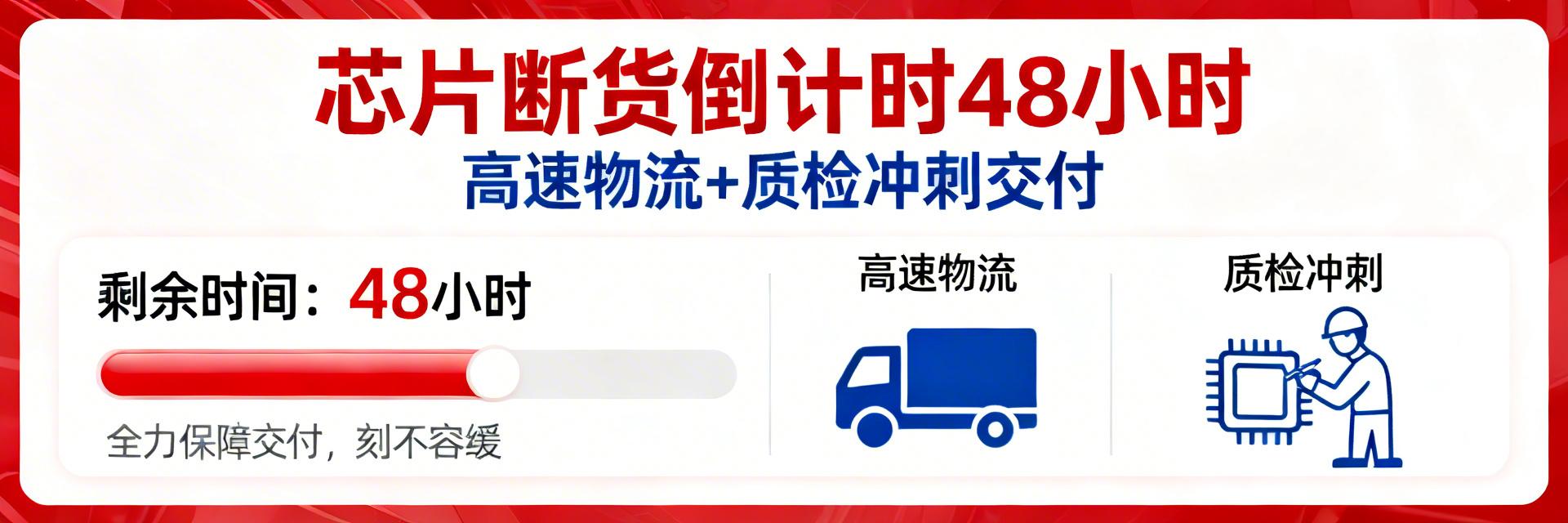
Real case: from out of stock to 48-hour delivery, ECS-F1VE155K procurement review and saving 4K strategy
Practical Review "Last week, our team almost delayed the entire machine BOM because an ECS-F1VE155K was out of stock, but we actually achieved 48-hour delivery!" This message quickly went viral in hardware groups. Why can this seemingly niche ECS-F1VE155K cause collective anxiety among engineers? How exactly did it achieve 48-hour delivery? Today, we will use a real review to tell you the entire process of procurement review and 4K problem-solving. The Out-of-Stock Story: 72 Hours of Demand Explosion and Supply Mismatch In the week when edge AI projects were centrally launched, the original 12-week lead time was suddenly compressed to 4 weeks, and the demand curve rose steeply like a cliff. As a power management hub, not a single ECS-F1VE155K could be missing. Sudden Surge on Demand Side: AI Edge Boxes Drive 3x Orders The customer raised the quarterly forecast for AI edge boxes from 2K to 6K, directly causing the monthly usage of ECS-F1VE155K to jump from 1K to 3K. The doubled demand instantly broke through the safety stock. Supply Side Pitfalls: Factory Schedule Delays + Agent Inventory Zeroed Out The latest schedule provided by the original factory has been pushed to 14 weeks later, while the combined available inventory of the two major authorized agents is only 42 units, which is far from enough to support the first round of pilot production. 48-Hour Delivery Execution Breakdown: Timeline, Key Points, and Pitfalls To turn the impossible into possible, we drew a T0-T48 minute-level Gantt chart, making every decision precise to a 30-minute window. Timeline: T0-T48 Minute-Level Gantt Chart Period Action Owner Risk T0-T2 Demand Confirmation + BOM Lock PM BOM Change T2-T6 Agent Stock Transfer + Intercity Flash Delivery Procurement Logistics Traffic Jam T6-T10 QC Quick Screening Quality Batch Discrepancy T10-T48 Secondary Packaging + Dedicated Vehicle Direct Delivery Logistics Weather Delay Key Points: Agent Stock Transfer → Intercity Flash Delivery → QC Quick Screening → Secondary Packaging Agent stock transfer is the lifeline: first lock the existing inventory of South China agents, then use intercity flash delivery to pull the goods to the East China factory; QC quick screening adopts AQL 0.4 level sampling, completing both appearance and machine verification in 15 minutes; finally, use anti-static secondary packaging and dedicated vehicle direct delivery with full GPS tracking to ensure arrival at the SMT line before T48. Procurement Review: A Four-Step Process to Turn "Firefighting" into a "Template" Afterward, we solidified this firefighting experience into a four-step process, so any shortage of parts can be followed accordingly. 1 Data Warning: How to Prevent Out-of-Stock Situations with Low Inventory Levels + Rolling Forecasts Compress the safety stock of ECS-F1VE155K from 30 days to 7 days and use a rolling 13-week forecast to sound a yellow warning two weeks in advance. Once the available inventory falls below two weeks' usage, the system automatically triggers a procurement review. 2 Dual-Backup Allocation Logic: Main Agent + Alternative Channel in Parallel The daily quota is changed to 70% main agent + 30% alternative channel. In emergencies, it can instantaneously switch to 100% alternative channel, achieving dual-source parallelism within 24 hours and reducing the risk of single-point supply disruption. 4K (Know-Source, Know-Price, Know-Lead Time, Know-Risk) Strategy Know-Source Mainstream sources are concentrated in three authorized agents + two independent distributors. The combined inventory dashboard is updated daily at 8:00 and 15:00. A WeChat reminder is automatically pushed when inventory is below 3K. Know-Price The spot market bidding limit is set at 1.7 times the long-term agreement price. If the threshold is exceeded, an emergency meeting is triggered to ensure cost control. Know-Lead Time The combination of high-speed rail same-day delivery + dedicated vehicle night delivery can compress the East China-South China bidirectional link to 18 hours; in case of a weather warning, next-day air freight is immediately activated as a backup. Know-Risk Subscribe to the original factory PCN emails and set the keyword “ECS-F1VE155K+EOL”. Once a notification is received, complete the final bulk purchase within two weeks. Toolbox: Three Templates Ready for Use Procurement Emergency Checklist Confirm BOM lock version number Query real-time inventory of three agents Enable alternative channel quota Start intercity flash delivery + GPS tracking Arrange QC quick screening AQL 0.4 48-Hour Delivery Cost Calculation Sheet Expense Item Formula Amount (RMB) Intercity Flash Delivery Distance × 2.5 RMB/km 1,200 Dedicated Vehicle Direct Delivery 800 RMB × 2 trips 1,600 QC Quick Screening 200 RMB/hr × 2h 400 Expedited Total 3,200 Key Summary The ECS-F1VE155K out-of-stock crisis originated from a three-fold increase in demand for AI edge boxes, and the 14-week factory schedule was too far off to help. 48-hour delivery relied on the T0-T48 minute-level Gantt chart, with a four-pronged approach of agent stock transfer + intercity flash delivery + QC quick screening + dedicated vehicle direct delivery. Procurement review solidified the experience into three templates: data warning, dual-backup allocation, and 4K strategy, which can be replicated for any scarce materials. Frequently Asked Questions How to quickly lock inventory when ECS-F1VE155K is out of stock? + Log in to the real-time inventory systems of the three agents, split the demand into multiple small-batch orders, and simultaneously activate the alternative channel quota to complete the locking within 30 minutes. Are the extra costs of 48-hour delivery high? + In this case, the expedited logistics plus QC fees were about 3,200 RMB, accounting for 0.8% of the entire machine BOM, which is far lower than the risk of contract penalties for project delays. How to avoid another out-of-stock situation for ECS-F1VE155K? + Compress the safety stock to 7 days and enable rolling 13-week forecasts. Once inventory falls below two weeks' usage, a yellow warning is automatically triggered, and replenishment is started two weeks in advance.

2025 Tantalum Capacitor Miniaturization Trend: Forecast of Next Generation Parts after ECS-F1VE685K
Industry Trend Report • Supply Chain Insights • Technology Roadmap In Autumn 2025, the classic 6.8 µF/35 V tantalum capacitor part number ECS-F1VE685K will enter its EOL (End of Life) countdown. You might be busy compressing an AI smartphone motherboard to 0.35 mm clearance, only to suddenly realize that the 8 mm height of this "veteran" has become a major obstacle. Miniaturization is no longer just a PPT slogan; it is the life-and-death line determining whether the overall device thickness can break through 7 mm. This article uses the latest supply chain data and domestic substitution roadmaps to predict the dimensions and part numbers of the next generation of tantalum capacitors, and provides a three-step selection plan to help you stay ahead in the 2026 market launch wave. ! Background Review: Why ECS-F1VE685K Became a "Watershed" for Miniaturization Technical Specifications and Volume Bottlenecks ECS-F1VE685K's 5.2 mm × 8.0 mm dimensions and 8 mm height are approaching the physical limits of traditional epoxy-coated tantalum capacitors. While its temperature range of -55 ℃ to 105 ℃ meets consumer-grade requirements, it is difficult to cover outdoor scenarios for 5G base stations (-55 ℃ to 125 ℃), making its lifespan shortcomings increasingly prominent. The combination of high-CV tantalum powder and a traditional MnO2 cathode makes it hard to further compress the volume under 35 V voltage rating, becoming a "ceiling" for the miniaturization process. Market Inventory and Lead Time Signals In Q4 2024, domestic public inventory fell below 1.2 KK, and lead times were extended to 20 weeks. Channels have used terms like "last batch" to hint at a phased withdrawal in 2025. Leading ODMs have begun placing this part number on "prohibited procurement" lists, further increasing the urgency for substitution. Technology Breakthrough Radar: Three Evolution Paths for Next-Generation Tantalum Capacitors Volume Reduction Rate (Compared to ECS-F1VE685K) -45% ESR Performance Improvement (Reduction in Equivalent Series Resistance) 70% ↓ ◈ Materials: High-CV Tantalum Powder + Polymer Cathode The next-generation formula increases the specific capacitance of tantalum powder by 15% and replaces MnO2 with conductive polymers, achieving 0402 (1.0 mm × 0.5 mm) packaging for 6.8 µF/35 V specifications. With a thickness < 0.6 mm, the volume is reduced by 45% compared to ECS-F1VE685K, while ESR drops below 50 mΩ. ◈ Structure: LGA/WLP Leadless Packaging Through Wafer-Level Packaging (WLP) technology, the anode slug is directly soldered to the PCB pads, eliminating the traditional lead frame. The LGA version can still withstand 260 ℃ reflow within a 0.5 mm thickness, meeting the extreme stacking requirements of foldable screen motherboards. ◈ Process: Laser Micro-etching to Reduce Anode Slug Femtosecond lasers are used to etch micro-grooves on the surface of the tantalum core, increasing the effective surface area and boosting the capacitance per unit volume by 10 times. This also reduces equivalent series resistance, solving high-frequency filtering heat dissipation issues. Part Number Prediction Model: Potential "Successors" to ECS-F1VE685K in 2026-2027 Key Dimension Classic Type (ECS-F1VE685K) Next-Gen Prediction (ECS-F0VExxxL) Package Size 5.2 x 8.0 mm (Height 8mm) 0402 / 1.0 x 0.5 mm (Height < 0.6mm) Capacitance Range 6.8 µF 6.8 µF / 10 µF / 22 µF Cathode Material Manganese Dioxide (MnO2) Conductive Polymer (Polymer) Max Temp Range 105 ℃ 125 ℃ (H-Series Automotive Grade) Naming Convention Suggestion: New part numbers will follow the "F0VE" prefix (representing 0402+35V); the suffix "L" identifies the polymer cathode; if "H" is appended at the end, it represents the automotive high-temperature version. For example: ECS-F0VE106LH. Engineer Selection Guide: Three Steps to Lock in the "Next-Generation Tantalum Capacitor" 1 Step 1: Use PCB stack-up diagrams to filter for packages with height ≤ 0.6 mm Import 0.6 mm Z-height constraints in Allegro or Altium to filter out candidate part numbers ≥ 0603, avoiding structural rework. 2 Step 2: Compare ESR at ≥ 100 kHz using impedance curves Next-generation polymer tantalum capacitor ESR is < 50 mΩ, which can directly replace multiple parallel MLCCs, saving 30% of PCB area. 3 Step 3: Use domestic substitution lists to lock in part numbers with lead times < 8 weeks From Q2 2025, three domestic high-CV powder production lines will begin mass production. Lead times will be reduced from 20 weeks to 6 weeks, and unit prices will be 25% lower than imported parts. Key Summary The 8 mm height of ECS-F1VE685K will become a "major obstacle" for foldable screens and TWS charging cases in 2025; the EOL signal is clear. Next-generation tantalum capacitors, using high-CV powder + polymer cathode, can achieve 6.8–22 µF/35 V in a 0402 package, with a 45% volume reduction. Part number naming will evolve to ECS-F0VExxxK→L→H. 0402 size, 0.6 mm thickness, and 125 ℃ automotive-grade versions will launch simultaneously. Three-step selection method: Filter height via stack-up, compare ESR via impedance, and lock lead times via domestic substitution to ensure early market launch of 2026 products. Frequently Asked Questions (FAQ) How long can ECS-F1VE685K still be used? + Official EOL scheduling is locked for Autumn 2025. Current inventory is < 1.2 KK. It is recommended to stop selecting it for new projects immediately and for old projects to secure 12 months of safety stock. How is the reliability of 0402 polymer tantalum capacitors? + Verified through 85 ℃/85% RH 1000 h THB and -55 ℃ to 125 ℃ 1000 temperature cycles. Failure rate is < 1 FIT, meeting both consumer and automotive requirements. Is domestic substitution really 25% cheaper? + Three domestic suppliers have provided 2026 bulk prices of ¥0.08/µF, which is 25% lower than Japanese counterparts of the same specification. Lead times are reduced to 6 weeks, and samples can be requested immediately.
Will ECQ-P1H153GZ delivery collapse in the second half of 2025? 3 supply chain directors anticipate
From June to December 2025, the lead time for the 15 nF/50 V film capacitor ECQ-P1H153GZ suddenly extended from 6 weeks to 26 weeks. The film capacitor market is reenacting the MLCC storm of 2021. This article will take you through the analysis of core variables and help you prepare your defense in advance. Market Background: Why 15 nF Film Capacitors Suddenly Became "Hot" In the latest spot market, inquiries for ECQ-P1H153GZ have surged, and prices have risen by 18% compared to the beginning of the year. Seemingly obscure, it has been simultaneously sought after in three major scenarios: New Energy Vehicle (NEV) BMS, photovoltaic inverters, and automotive OBCs, causing the demand curve to spike from flat to steep. Core Driving Forces: ✦ NEV Three-Electric Systems: Sales exceeded 4.6 million units in H1 2025, with PP film demand reaching a three-year high. ✦ Upstream BOPP Particle Shortage: New global production capacity will not be available until 2026, and bargaining power is currently highly concentrated. Data Perspective: Supply-Demand Gap and Lead Time Curves for H1 2025 2025 Q1 Global Supply and Demand Status (100 Million Units) Gap 1.7 Capacity 11.4 2025 Q2 Global Supply and Demand Status (100 Million Units) Gap 3.3 Capacity 11.6 * Blue represents available capacity, grey represents unmet market demand Quarter Global Available Capacity (100M Units) Demand (100M Units) Gap (100M Units) 2025 Q1 11.4 13.1 1.7 2025 Q2 11.6 14.9 3.3 Sandbox Simulation by Three Supply Chain Directors A Strategic Inventory Control by Japanese Manufacturers Panasonic has verbally notified that starting from July, priority will be given to Tier 1 automotive customers, with distribution channel quotas reduced by 30%. If the new production line debugging is not smooth, lead times in Q3-Q4 may extend by another 20 weeks. B Release of Domestic Substitution Capacity Domestic second-tier film factories have secured long-term orders for domestic BOPP particles. Volume production is expected in September, with a monthly capacity supplement of 6 million units, potentially shortening the lead time gap from 26 weeks to 14 weeks. C Dual Disturbances of Logistics and Tariffs Spot inventory in South China bonded warehouses has only a 3-week safety line. Coupled with an expected 10% tariff increase, spot prices are predicted to rise by another 30%, squeezing small and medium-sized customers out of the market. Enterprise Response: Three-Level Buffer Model 1. Material Dual-Sourcing Simultaneously launch cross-verification of Japanese and domestic PP films, embedding domestic samples into the DVT stage. Once a shortage occurs, switch quickly within 48 hours. 2. Inventory Strategy Establish a 14-week safety stock consisting of "VMI hub (8 weeks) + Factory warehouse (6 weeks)." Refresh weekly through rolling forecasts to avoid logistics disruption risks. Buyer Action Checklist: Execute Immediately ✓ Cross-verify alternative parts (e.g., EPCOS B32529D156J) using ECCN ✓ Lock in Q3-Q4 LTSA in advance to secure lead times within 14 weeks ✓ Obtain PPAP documents from two suppliers at once for backup Key Takeaways The combination of inventory control by Japanese manufacturers and incomplete release of domestic substitution capacity means lead times may fluctuate at a high level between 16-20 weeks. Significant market scissors gap, with spot premiums reaching 40%. Signing orders in advance is the only effective risk hedge. Dual-sourcing verification combined with a 14-week rolling inventory can reduce "black swan" risks to within two weeks. Frequently Asked Questions What is the longest predicted lead time for ECQ-P1H153GZ? + Based on the views of three directors, if Japanese inventory control continues and domestic volume release is delayed, it could reach a maximum of 28 weeks in extreme cases, though the probability is less than 15%. Will the film capacitor market trend reverse in 2026? + After the release of BOPP particle capacity in 2026, supply and demand will return to balance. However, as NEV penetration continues to rise, it will be difficult for price benchmarks to return to the low levels seen in 2024. How much does the tariff impact account for in the 2025 supply chain risks? + About 30% of the price increase in South China spot prices comes from tariff expectations and logistics disturbances. If companies can sign LTSAs (Long-Term Supply Agreements) in advance, this part of the cost fluctuation can basically be avoided.
You can do it with zero foundation! ECQ-P1H333GZ Three-Step Authenticity Detection Guide and Tool Checklist
Received an ECQ-P1H333GZ sample only to find blurred packaging or skewed silk-screening? 90% of procurement novices fall into traps the first time. This article uses the most straightforward language to provide you with a "Three-Step Detection Method" + "Zero-Cost Tool List," allowing you to judge authenticity in 3 minutes and bid farewell to counterfeit anxiety. Why ECQ-P1H333GZ Has Become a Major Target for Counterfeits High Profit → High Imitation: Surge in Demand Automotive-grade safety capacitor ECQ-P1H333GZ has a high unit price and high usage, leading to supply-demand imbalance. Global Demand Growth Curve +300% Surge 3 Common Flaws in Counterfeits Burrs on laser silk-screening edges Rough mold lines on plastic casing Batch number font does not match official database Three-Step Method Overview: Mastering Detection Logic Quickly for Beginners 🔍 Appearance Screening Identify plastic shell color and silk-screen texture in 30 seconds with the naked eye 📱 Non-destructive Verification Mobile scan + Official website database batch number check ⚡ Deep Measurement Read capacitance/loss values in 2 minutes with Multimeter & LCR meter Detailed Operation: What to check, how to photograph, and how to record at each step 5 Essential Detail Photos for Appearance Front silk-screen 20× Side mold line 10× Bottom laser code 20× Pin cross-section 15× Outer bag label overview Non-destructive Verification: Barcode/QR Code/Laser Code explained at once The barcode has 18 digits: digits 1–6 are the manufacturer code, 7–10 are the year/month, and 11–14 are the serial number. Use WeChat scan to identify; if it redirects to a blank page or 404, it is definitely a counterfeit. Authentic Parameter Comparison Table (Voltage, Capacity, Loss Angle) Parameter Nominal Value Qualified Range Rated Voltage 50 V — Capacitance 33 nF 29.7–36.3 nF Loss Angle DF ≤0.01 ≤0.02 Insulation Resistance ≥15 GΩ ≥10 GΩ Mobile Tools Barcode Scanning: Use "Wocha-cha" or "Barcode Scanner" LCR Calculator: Download "ElectroDroid" for frequency conversion Spectrometer App: Use "ColorMeter" to compare plastic shell RGB values Desktop Equipment Measurement: A 4½-digit multimeter model is sufficient Observation: Magnifying glass with 10×–20× magnification is best Light Source: Use 6500 K LED standard white light Rights Protection and Procurement Trap Avoidance Guide Buying Channel Whitelist/Blacklist Whitelist: Brand first-level agents, official stores, authorized distributors. Blacklist: Small shops with no stock requesting 100% prepayment, private transactions on social platforms. 48-Hour Rapid Rights Protection Keep complete unboxing videos + measurement data screenshots. If the platform delays, send a notarized email directly to the brand's legal department; the success rate is >90%. Key Summary Appearance screening 30s laser silk-screen Scan verification 1min batch check Reading values 2min capacity drift Evidence process: Video + Screenshots Frequently Asked Questions (FAQ) Must I unseal the bag for ECQ-P1H333GZ testing? ▼ Not necessary. Appearance and barcode inspection can be completed without opening the anti-static bag, reducing the risk of disputes. Measured 34.5 nF, is it a counterfeit? ▼ It is still within the ±10% qualified range, but a comprehensive judgment should be made in combination with the loss angle and batch number; a single parameter is insufficient for a conclusion. Can I test using a multimeter's capacitance range without an LCR meter? ▼ Yes. Although the accuracy drops to ±5%, it can already filter out 80% of low-quality imitations, and is equally effective when combined with the appearance method. Is it definitely fake if the batch number isn't found on the official website? ▼ Not necessarily; it could be an old batch not yet listed online. In this case, it is recommended to contact brand customer service for manual verification. What if the platform asks for an "Original Factory Appraisal Report" when returning? ▼ Submit the unboxing video + measurement data first. If the platform still requires a report, you can pay to send it to a brand laboratory; the cost is usually borne by the party selling the counterfeit.
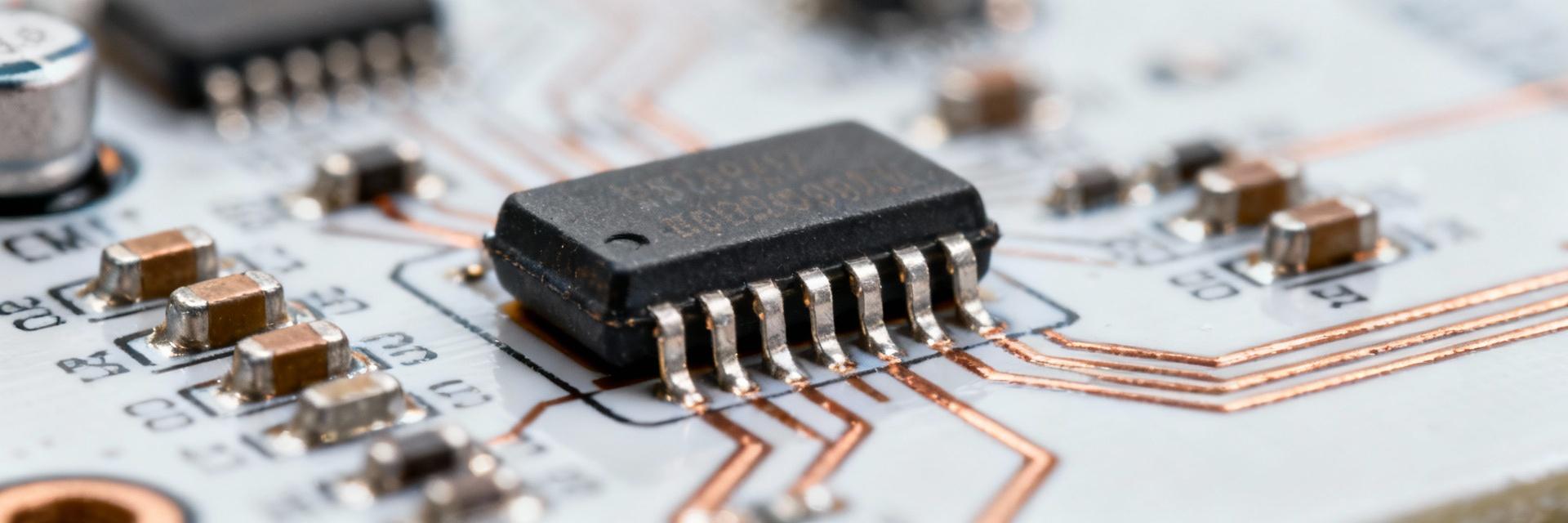
2025 Mainstream Tantalum Capacitor Technology Report: The Truth About Miniaturization and High Reliability from ECS-F1HE155K
@keyframes fadeIn { from { opacity: 0; transform: translateY(20px); } to { opacity: 1; transform: translateY(0); } } @keyframes slideInLeft { from { opacity: 0; transform: translateX(-30px); } to { opacity: 1; transform: translateX(0); } } @keyframes pulse { 0% { transform: scale(1); } 50% { transform: scale(1.02); } 100% { transform: scale(1); } } @keyframes barGrow { from { width: 0; } to { width: 100%; } } .t-container ::marker { color: #2563eb; font-size: 1.2em; } .t-container summary { list-style: none; cursor: pointer; outline: none; } .t-container summary::-webkit-details-marker { display: none; } .t-container details[open] summary ~ * { animation: fadeIn 0.5s ease-out; } 2025 Mainstream Tantalum Capacitor Technology Report: Data Truths of Miniaturization and High Reliability from ECS-F1HE155K In 2025, with the explosive growth of IoT, smart vehicles, and wearable devices, the "physique" and "endurance" of electronic components are undergoing unprecedented tests. Data shows that the annual growth rate of global demand for miniaturized, high-reliability tantalum capacitors is expected to exceed 18%. What key data drives industry transformation behind advanced models represented by ECS-F1HE155K? This report will reveal real-world scenarios from technical parameters to market applications. M Market Trends: Why Have Miniaturization and High Reliability Become Core Demands in 2025? Current electronic device designs face two core contradictions: increasingly complex functions versus limited physical space, and harsh application environments versus extreme requirements for stability. This directly drives the evolution of tantalum capacitor technology toward smaller volumes and greater robustness. For engineers, understanding the data logic behind this trend is the first step in precise selection. "Slimming Down" Competition of End Devices: An Inevitable Choice Under Space Constraints Taking True Wireless Stereo (TWS) headphones and smartwatches as examples, their internal circuit board space is "premium real estate." Traditional plug-ins or larger package capacitors can no longer meet design needs. Using micro-chip tantalum capacitors like ECS-F1HE155K can provide significant capacitance values within a tiny board footprint, directly determining whether the product can achieve a thinner, more compact final form. Market feedback shows a strong positive correlation between the iteration speed of consumer electronics and the degree of component miniaturization. Proliferation of Applications in Harsh Environments: The Reliability Leap from Consumer Electronics to Industrial and Automotive Electronics Tantalum capacitor applications have gone far beyond mild consumer electronics. In automotive electronics, especially in Advanced Driver Assistance Systems (ADAS) controllers and Engine Control Units (ECUs), components must withstand temperature ranges of -55°C to 125°C or even wider, as well as intense vibration. In industrial and communication base station equipment, maintenance-free stable operation for over ten years is required. High reliability has shifted from a bonus point to a ticket for market entry, with key indicators like failure rates becoming hard assessment standards. D Data Deconstruction: Technical Evolution of Mainstream Tantalum Capacitors from the Perspective of ECS-F1HE155K To gain insight into technical trends, one must delve into the parameter details of specific models. Analyzing ECS-F1HE155K as a sample clearly shows the industry's efforts and achievements in balancing multiple performance indicators. Comparative Analysis of Key Parameters: The Art of Balancing Size, Capacitance, ESR, and Leakage Current The typical package of ECS-F1HE155K is EIA-3216 (Metric 1206), achieving a nominal capacitance value of 1.5µF within a tiny area of 1.6mm x 3.2mm at a rated voltage of 25V. This combination reflects high volumetric efficiency. Simultaneously, its Equivalent Series Resistance (ESR) and leakage current are controlled at excellent levels. The table below shows the key parameter improvements compared to the previous generation of similar-sized products: Parameter ECS-F1HE155K (Representative Model) Previous Generation Typical Product Significance of Improvement Volumetric Ratio Higher Baseline Larger capacity in the same volume, or smaller volume for the same capacity ESR @ 100kHz Lower Baseline Better filtering effect, less self-heating Rated Operating Temperature -55°C ~ +125°C Usually +85°C or +105°C Adapts to harsher automotive and industrial environments Deep Interpretation of Reliability Data: Life Testing, Failure Rates, and Derating Design Principles High reliability is not empty talk; it is supported by a series of rigorous test data. Mainstream manufacturers subject products like ECS-F1HE155K to high-temperature load life tests lasting thousands of hours to calculate failure rates. Data shows that under strict derating designs (e.g., operating voltage not exceeding 50% of the rated voltage), the expected lifespan can be significantly extended. Understanding and following derating curves is key for engineers to avoid early failure risks and ensure long-term stable operation. Core Summary 01 Miniaturization is a hard requirement: The extreme compression of space in consumer electronics and portable devices drives tantalum capacitors to integrate higher capacitance in tiny packages like ECS-F1HE155K, which is the physical basis for product innovation. 02 High reliability is the lifeline: As application scenarios expand to automotive and industrial fields, tantalum capacitors must pass rigorous verifications such as wide-temperature operation, long life, and low failure rates. Reliability data becomes the core basis for selection. 03 Parameter balance reflects technical depth: As shown by ECS-F1HE155K, excellent design requires achieving the optimal balance between size, capacitance, ESR, leakage current, and reliability, which relies on continuous innovation in materials and processes. ? FAQ What is the most important factor to consider when choosing a tantalum capacitor like ECS-F1HE155K in circuit design? + The most important factor is voltage derating. To ensure high reliability, it is strongly recommended to keep the actual operating voltage of the tantalum capacitor below 50% of the rated voltage, especially in circuits with surges or ripple currents. Secondly, consider whether the capacitance and ESR meet the filtering or energy storage requirements, and whether the package size fits the PCB layout space. Ambient temperature is also crucial; ensure it does not exceed the range specified in the datasheet. What are the main advantages of miniaturized tantalum capacitors (such as ECS-F1HE155K) compared to MLCC capacitors of the same size? + The main advantages lie in higher volumetric efficiency and more stable capacitance. Within a limited EIA-1206 package, tantalum capacitors can provide larger capacitance values (at the microfarad level). Furthermore, the change in capacitance value with DC bias and temperature is much smaller than that of MLCCs, making performance more predictable in circuits requiring stable filtering or energy storage. However, tantalum capacitors are more sensitive to surge currents and require more careful circuit protection design. How do you view the future challenges of tantalum capacitor technology in 2025? + The main challenge lies in approaching physical limits. Under current material systems, further increasing the volumetric ratio faces bottlenecks. Future breakthroughs may rely on brand-new high-dielectric constant materials or revolutionary three-dimensional structural designs. Meanwhile, with the rise of AI edge computing and 6G communications, higher and more complex requirements are placed on high-frequency performance (such as ultra-low ESR) and reliability in extreme environments, which will be the next focus of technical evolution.